COP31 Antalya Ends Without a Deal: Why the “Antalya Pact” Failed and What It Means for India
Short answer: The UN climate conference COP31 in Antalya, Türkiye closed at 7:33 pm on Sunday 22 November 2026, almost 50 hours late, without adopting its main political outcome, the two cover decisions called the “Antalya Pact”. The EU, Panama, the Marshall Islands, Vanuatu and others objected that the text ignored the science, left out any transition away from fossil fuels and offered too little finance. Some decisions did pass, including on the Global Goal on Adaptation, the Adaptation Fund and the Just Transition Work Programme. India regretted the lack of consensus and kept its focus on equity, CBDR-RC and climate finance.
By Prayag IAS Academy, Dehradun · Updated 23 November 2026 · Facts checked against the Earth Negotiations Bulletin and PIB
Key takeaways
COP31 ran from 9 November and was due to end on Friday 20 November. It became the longest-running COP so far.
The cover decisions under both the COP and the CMA (the Paris Agreement’s governing body) were not adopted.
Draft decisions on the Mitigation Work Programme, response measures and the Global Environment Facility also failed.
India’s minister Bhupender Yadav called for equitable access to the remaining carbon budget and warned against unilateral trade measures.
COP32 is due in Addis Ababa, Ethiopia, in 2027.
What happened at COP31 in Antalya?
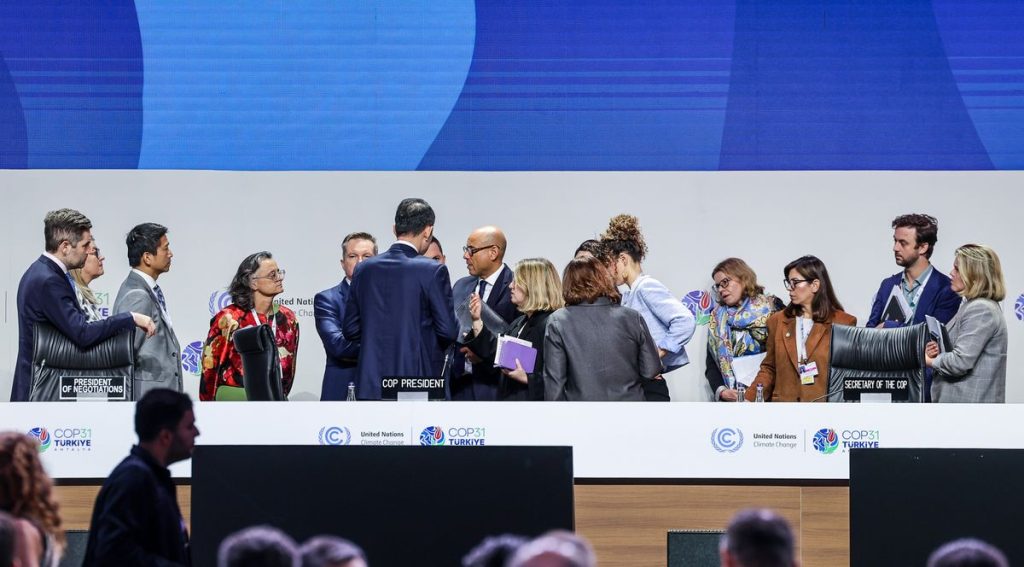
COP31 presidencies and the UNFCCC secretariat confer on the dais before the closing plenary in Antalya, 22 November 2026. Photo: IISD/ENB, Mike Muzurakis (free to use with attribution).
Climate summits rarely end on time, but Antalya set a record. Talks that should have wrapped up on Friday evening ran through the weekend. By Sunday morning delegations were still waiting for revised texts on adaptation, finance, mitigation, just transition and the cover decisions. When the plenary finally reconvened, several key texts fell apart in front of the world.
Closing the session, COP31 President Murat Kurum of Türkiye said: “I leave the deadlock of the negotiations to the judgement of the entire world and humanity.” The Earth Negotiations Bulletin recorded the gavel at 7:33 pm on 22 November, almost 50 hours after the scheduled finish.
Item
Detail
Conference
31st Conference of the Parties (COP31) to the UNFCCC
Venue
Antalya, Türkiye
Opened
9 November 2026
Scheduled close
Friday, 20 November 2026
Actual close
7:33 pm, Sunday 22 November 2026
COP31 President
Murat Kurum, Türkiye
Theme (as cited by India)
“Dialogue, Consensus and Action”
Main outcome
Cover decisions (“Antalya Pact”) not adopted
What is a cover decision, and why does it matter?
Every COP adopts dozens of technical decisions. The cover decision is the political summary on top of them: the text leaders point to when they say what a summit achieved. Recent examples include the Glasgow Climate Pact (2021) and the UAE Consensus (2023), which first called for “transitioning away from fossil fuels”.
At Antalya the presidency proposed two such texts, one under the COP (all UNFCCC Parties) and one under the CMA (the Parties to the Paris Agreement). Together they were called the “Antalya Pact”. Because UN climate decisions need consensus, a handful of firm objections is enough to block them.
Why did the Antalya Pact fail?
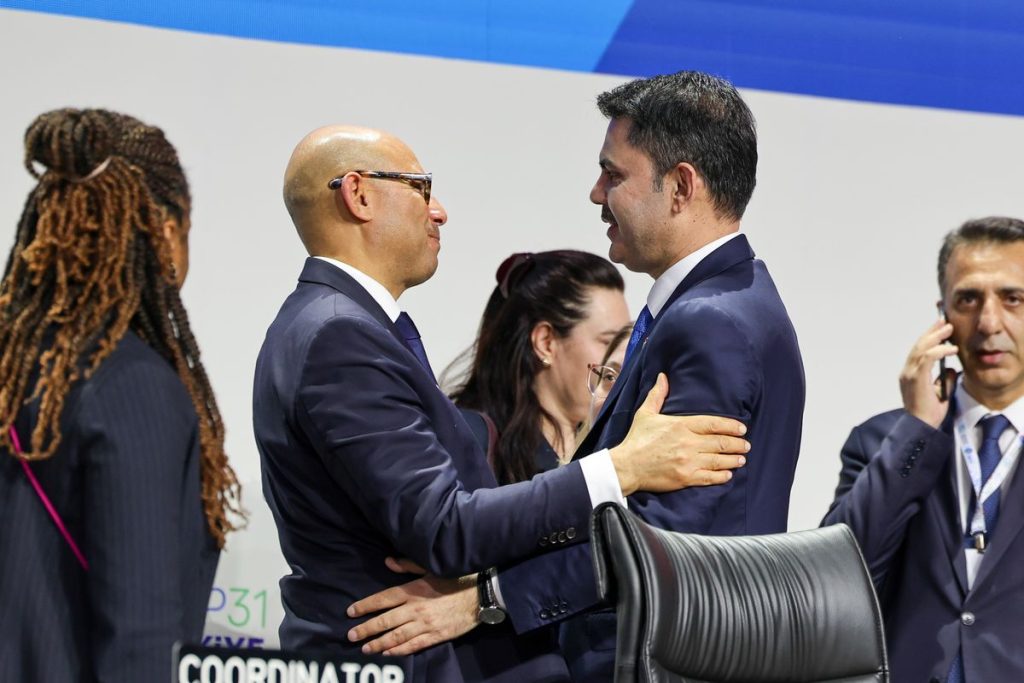
UNFCCC Executive Secretary Simon Stiell with COP31 President Murat Kurum in Antalya. Photo: IISD/ENB, Mike Muzurakis (free to use with attribution).
According to the Earth Negotiations Bulletin, objections centred on three linked concerns: the text did not respond to the science on overshooting 1.5°C, it had no language on transitioning away from fossil fuels, and it offered developing countries too little finance. Here is who said what:
Party or group
Position on the Antalya Pact
European Union
Rejected it: said it did not respond to science or mention fossil fuels and “greenwashed” the fossil fuel industry
Panama
Rejected it: said it failed to close the gap between science and action and leaned on carbon capture, utilisation and storage
Marshall Islands and Vanuatu
Rejected what they called false solutions that legitimise fossil-fuel dependence
UK, Norway, Environmental Integrity Group, LDCs
Warned against retreating from the first Global Stocktake’s call to transition away from fossil fuels; LDCs called adaptation finance weak
African Group
Unhappy with tripling adaptation finance without a baseline and an Antalya–Addis Ababa roadmap without assured delivery, but supported adoption
Arab Group
Regretted the lack of clear finance commitments, but supported adoption
The split was not simply rich versus poor. Some vulnerable island states sided with Europe on fossil fuels, while large developing-country groups were ready to accept a weak deal rather than none.
What was actually agreed at COP31?
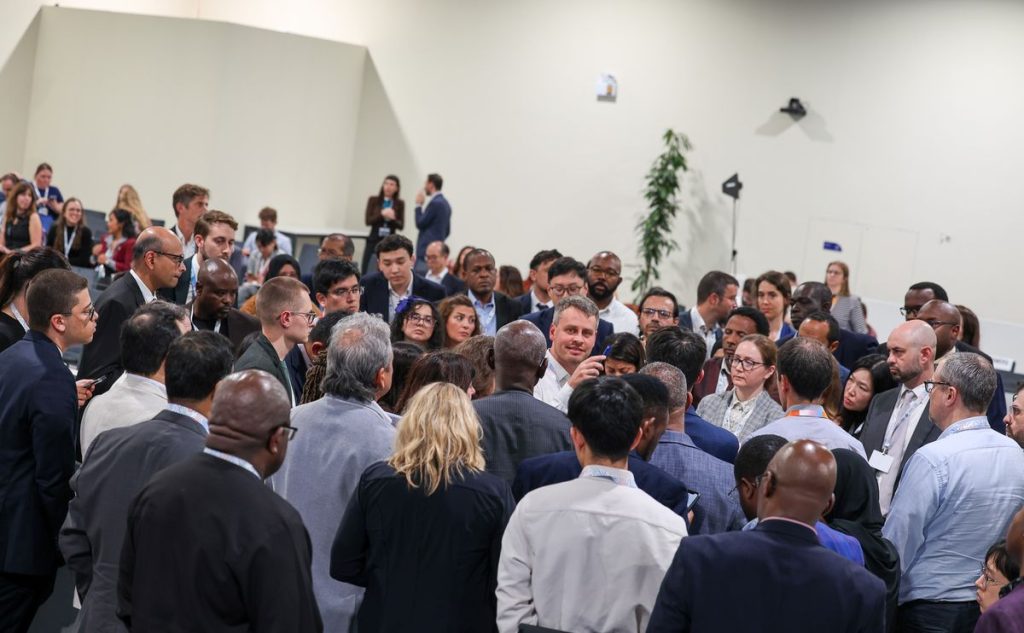
Delegates huddle during informal negotiations on Article 6.2 of the Paris Agreement at COP31. Photo: IISD/ENB, Mike Muzurakis (free to use with attribution).
A collapsed cover decision does not mean nothing passed. The Earth Negotiations Bulletin lists what was and was not agreed on the final day:
Adopted
Not adopted
Decision on the Global Goal on Adaptation
COP cover decision (part of the Antalya Pact)
Decision on the Adaptation Fund
CMA cover decision (part of the Antalya Pact)
Outcome on the Just Transition Work Programme
Mitigation Work Programme
Next steps on several other items
Response measures
Guidance to the Global Environment Facility
Two popular ideas were also left without a home. Fiji asked for a standalone decision on the ocean and the landlocked developing countries asked for one on mountains. Both had been inside the cover decision and had wide support.
What did India say at COP31?
India went into Antalya with a clear line. In its national statement on 18 November (PIB), Environment Minister Bhupender Yadav:
said warming is the result of two centuries of industrialisation in some countries, and the Global South cannot be made to bear that burden “in the name of higher ambition”;
called equitable access to the remaining carbon budget “non-negotiable”;
asked for the Mitigation Work Programme to stay facilitative and non-prescriptive, the Global Stocktake to inform rather than dictate, and the Just Transition Mechanism to be anchored in equity;
warned against unilateral trade measures that penalise developing countries “under the guise of climate action”;
asked developed countries to meet their climate finance obligations.
After the collapse, Yadav said India regretted the lack of consensus, had negotiated constructively to the end alongside the BASIC group and the Like-Minded Developing Countries, and that “climate ambition must go hand in hand with means of implementation”. He added that domestic action would continue, citing India’s solar capacity of over 170 GW (The Tribune).
For India the result is mixed. A text without fossil-fuel language avoided pressure on coal, but the failure also means no new finance signal for developing countries, which India has pushed for since the New Collective Quantified Goal was set at COP29.
Is this the first time a COP has failed?
It is rare, but not new. The best-known failure is COP15 in Copenhagen (2009), where Parties only “took note” of the Copenhagen Accord instead of adopting it. That breakdown led to six years of rebuilding that ended in the Paris Agreement in 2015.
Antalya is different in one way. The Paris Agreement and its rules remain in force, and countries’ climate plans (NDCs) still stand. What failed was the political signal on top, not the treaty system underneath.
What happens next after Antalya?
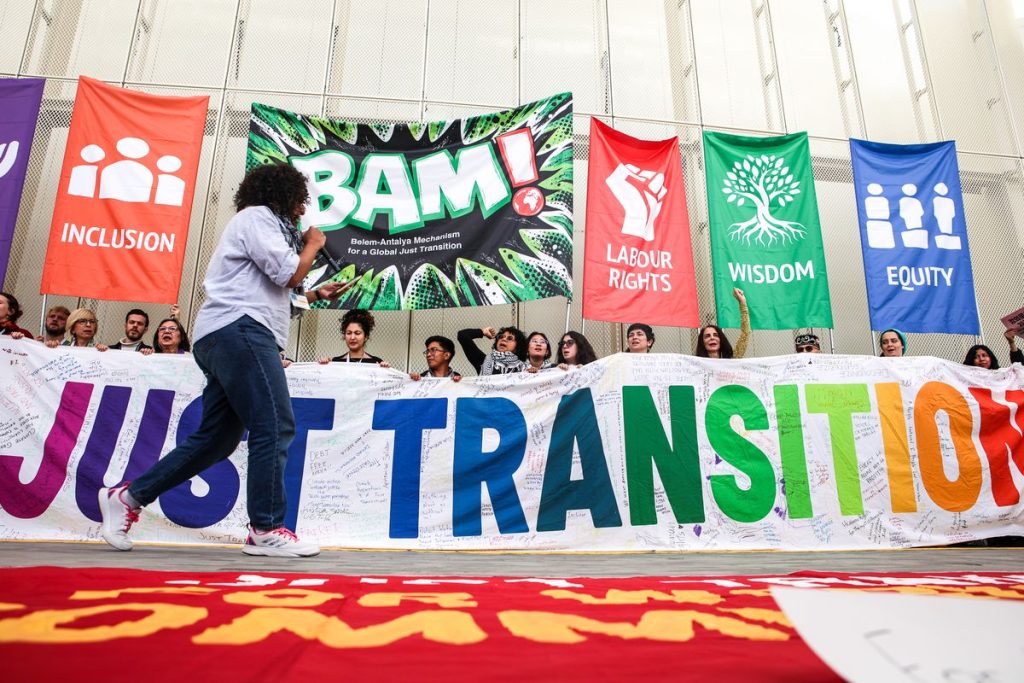
Civil society banner calling for a just transition at the COP31 venue in Antalya. Photo: IISD/ENB, Mike Muzurakis (free to use with attribution).
Unfinished items roll forward. Under UNFCCC practice, agenda items not concluded at one session are taken up at the next. Expect the Mitigation Work Programme and response measures to return at the mid-year talks in Bonn in 2027.
The second Global Stocktake has begun. COP31 marked its start, so the fossil-fuel and finance fights will continue inside that process.
COP32 in Addis Ababa. Ethiopia was chosen to host COP32 in 2027 (allAfrica). The draft Antalya Pact even proposed an “Antalya–Addis Ababa roadmap”, so Africa’s priorities on adaptation finance will dominate.
India’s next steps. India has said it will keep engaging in the run-up to COP32, and watch for its updated NDC and positions through BASIC and the LMDC.
Which COP31 terms should UPSC aspirants know?
These are the terms you will need for Prelims and Mains:
Term
What it means
UNFCCC
UN Framework Convention on Climate Change, adopted in 1992; the COP is its supreme body
CMA
COP serving as the Meeting of the Parties to the Paris Agreement
CBDR-RC
Common but Differentiated Responsibilities and Respective Capabilities, the equity principle India stresses
NDC
Nationally Determined Contribution, each country’s climate plan under the Paris Agreement
Global Stocktake (GST)
Five-yearly review of collective progress; the first concluded at COP28 (2023), the second began at COP31
Mitigation Work Programme
Process to scale up emission cuts this decade; India wants it non-prescriptive
Global Goal on Adaptation
Paris Agreement goal on adaptation; COP31 adopted a decision on it
Just Transition
Making the shift away from fossil fuels fair for workers and communities
BASIC
Brazil, South Africa, India and China
LMDC
Like-Minded Developing Countries, a negotiating bloc India works with
Mains practice question (GS Paper III, 250 words):
“The failure to adopt a cover decision at COP31 reflects a deeper divide over who should pay for and lead the energy transition.” Discuss with reference to India’s position.
Structure: what happened at Antalya → the three objections → India’s equity and finance argument → limits of consensus decision-making → way forward (finance delivery, technology sharing, national action).
For daily practice on environment and international events, take our free daily current affairs quiz in Hindi and English. If you are choosing how to prepare from outside Dehradun, our guide to online UPSC coaching in India compares formats, fees and free resources.
FAQs on COP31 Antalya
Where and when was COP31 held?
In Antalya, Türkiye, from 9 November 2026. It was due to close on 20 November but ended at 7:33 pm on 22 November 2026, almost 50 hours late.
What was the Antalya Pact?
The name for the two proposed cover decisions at COP31, one under the COP and one under the CMA of the Paris Agreement. Neither was adopted because several Parties objected.
Why did COP31 fail to reach a deal?
Objections centred on three points: the text did not respond to the science on overshooting 1.5°C, it left out any transition away from fossil fuels, and it offered too little finance to developing countries.
What was agreed at COP31?
Parties adopted outcomes on the Global Goal on Adaptation, the Adaptation Fund and the Just Transition Work Programme. Draft decisions on the Mitigation Work Programme, response measures and the GEF were not adopted.
What was India's position at COP31?
India stressed equity, climate justice and CBDR-RC, called equitable access to the remaining carbon budget non-negotiable, opposed unilateral trade measures and asked developed countries to meet their finance obligations.
Who was the President of COP31?
Murat Kurum of Türkiye.
Where will COP32 be held?
Addis Ababa, Ethiopia, in 2027.
Has a COP failed like this before?
Yes. At COP15 in Copenhagen in 2009, Parties only took note of the Copenhagen Accord instead of adopting it.
The tables summarise these sources; the practice question is Prayag IAS Academy’s own. Photos by IISD/ENB (Mike Muzurakis), free to use with attribution.
BIMSTEC was founded on 6 June 1997 and has seven members, a Secretariat in Dhaka and seven sectors. This week’s news, the Sixth Summit outcomes, a SAARC-ASEAN comparison and UPSC notes, with Hindi quick facts.
COP31 in Antalya ended on 22 November 2026 without adopting the Antalya Pact. Why it failed, what was agreed, what India said and the key terms for UPSC.
UPSC CSE 2026 interviews run from 7 December 2026 to 12 February 2027 for 2,526 candidates. How to find your date, reporting time, e-Summon, travel allowance and a plan for the weeks left.
The 1996 Ganga Water Treaty with Bangladesh expires on 12 December 2026. The Farakka sharing formula, what happens if it lapses, what each side wants, and how to prepare it for UPSC.