Ganga Water Treaty 2026: What Happens When the India–Bangladesh Pact Expires on 12 December
Update, 24 November 2026: The 91st meeting of the India–Bangladesh Joint Committee on the treaty was held in Dhaka on 22 November. It finalised the annual implementation report for 2026; it did not discuss renewal, which is outside the Committee’s mandate.
Bangladesh now asks India to begin formal negotiations to renew the 1996 treaty before 12 December, and has asked India to name its own technical committee (Bangladesh formed one in June 2026).
India’s MEA says the Joint Rivers Commission is the established mechanism for all river issues, including the Ganga.
Short answer: The Ganga Water Treaty, signed on 12 December 1996, shares the river’s dry-season flow at Farakka between India and Bangladesh from 1 January to 31 May every year. It runs for 30 years, so it expires on 12 December 2026. Article XII says it can be renewed only “on the basis of mutual consent”. As of 17 November 2026, no renewal or new treaty has been announced.
By Prayag IAS Academy, Dehradun · Updated 17 November 2026 · Facts checked against the treaty text and recent official statements
Key takeaways
The treaty lapses on 12 December 2026, less than four weeks away. The next dry season it governs starts on 1 January 2027.
Bangladesh wants a new treaty with a guaranteed minimum share. India says talks will run through the Joint Rivers Commission and has not confirmed any terms.
On 15 November, Manjur Ahmed Chowdhury, a former chairman of Bangladesh’s National River Conservation Commission, suggested renewing the present treaty for three to five years as a stopgap (TBS News).
The core formula: when flow at Farakka is 70,000 cusecs or less, each side gets 50%. Between 11 March and 10 May, each side is guaranteed 35,000 cusecs in alternate 10-day periods.
Exam angle: Farakka Barrage, the Joint Rivers Commission, Article 253 and the treaty power, and a comparison with the Indus Waters Treaty.
Why is the Ganga Water Treaty in the news in November 2026?
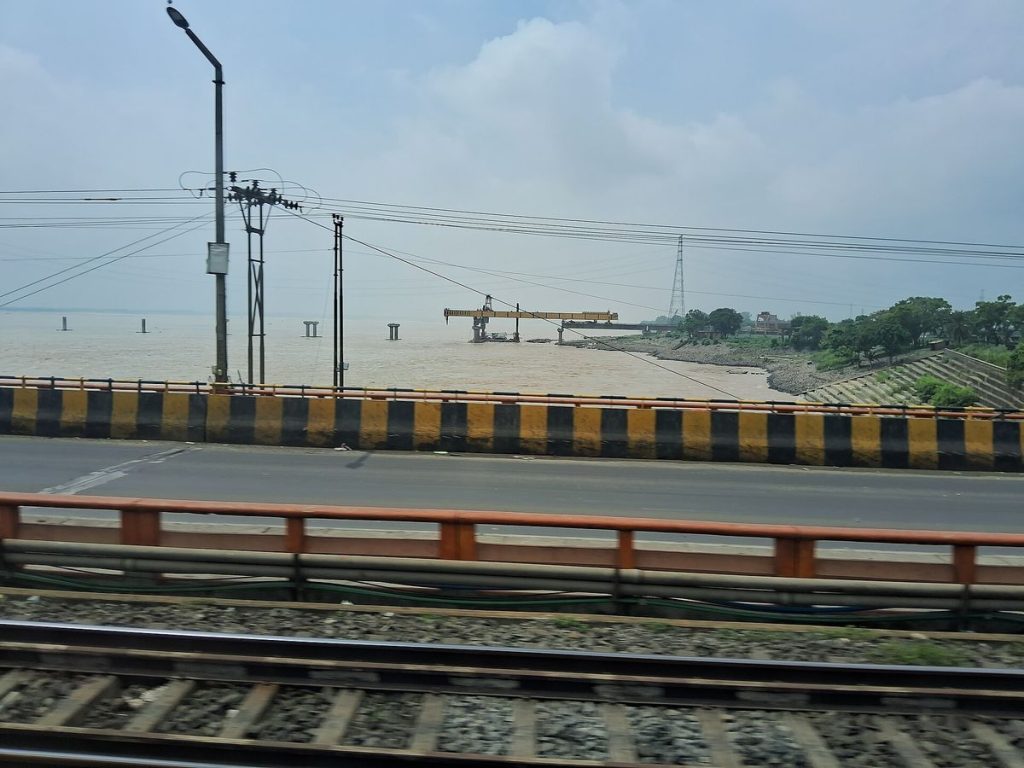
The Ganga seen from Farakka Barrage in Murshidabad district, West Bengal, where the 1996 treaty shares the dry-season flow. Photo: শরদিন্দু ভট্টাচার্য্য, CC BY-SA 4.0, via Wikimedia Commons.
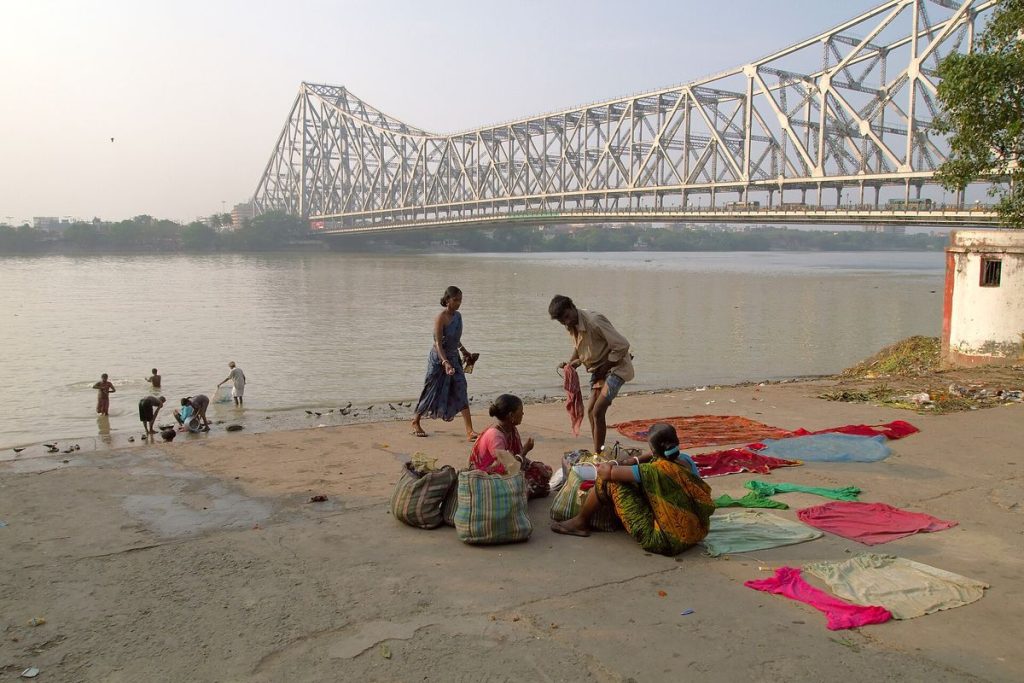
For thirty years, a farmer in Kushtia or Rajshahi has known roughly how much Ganga water would reach the Padma each spring. That certainty came from one short document signed in New Delhi in 1996. It runs out on 12 December 2026, and the two governments have not yet agreed on what replaces it.
Three things put it in the news this week:
The clock. On 11 November, The Week reported that no renewal, extension or replacement had been announced. Bangladesh had told AFP in late October that India had not yet replied to its request to negotiate.
A stopgap idea. On 15 November, Manjur Ahmed Chowdhury said four weeks was too little time to write a new treaty. He proposed renewing the old one for three to five years and called a weak treaty better than none (TBS News, 16 Nov).
India’s line. On 3–4 November the Ministry of External Affairs said there was no update on renewal. Spokesperson Randhir Jaiswal had earlier said that all river and water matters are discussed “within the ambit of the Joint Rivers Commission” (LawStreet Journal).
For UPSC, this is a classic GS Paper II topic: a neighbour, a shared river and federal politics all meet in one question.
What is the Ganga Water Treaty of 1996?
The treaty’s official title is the Treaty between the Government of the People’s Republic of Bangladesh and the Government of the Republic of India on Sharing of the Ganga/Ganges Waters at Farakka. Prime Ministers H.D. Deve Gowda and Sheikh Hasina signed it in New Delhi on 12 December 1996, in Hindi, Bangla and English (treaty text, Ministry of Jal Shakti).
It has just twelve Articles and two annexures. The parts that matter most:
Article I: India releases Bangladesh’s share at Farakka.
Article II: water is shared in 10-day periods from 1 January to 31 May, using a formula in Annexure I and a schedule in Annexure II based on average flows from 1949 to 1988. If flow falls below 50,000 cusecs in any 10-day period, the two governments must consult at once “on an emergency basis”.
Article III: between Farakka and the point where both banks are in Bangladesh, India may use no more than 200 cusecs.
Articles IV–VII: a Joint Committee measures flows at Farakka and at Hardinge Bridge in Bangladesh. Disputes go first to the Committee, then to the Joint Rivers Commission, then to the two governments.
Article VIII: both sides agree to work on increasing the Ganga’s dry-season flow over the long term.
Article IX: both sides agree to sign sharing treaties for other common rivers.
Article X: the arrangement is reviewed every five years.
Article XI: if a review ends without agreement, India must still release at least 90% of Bangladesh’s share under the formula.
Article XII: the treaty lasts 30 years and is “renewable on the basis of mutual consent”.
Notice what is missing: there is no clause for automatic renewal and none for what happens after expiry.
How is Ganga water shared at Farakka?
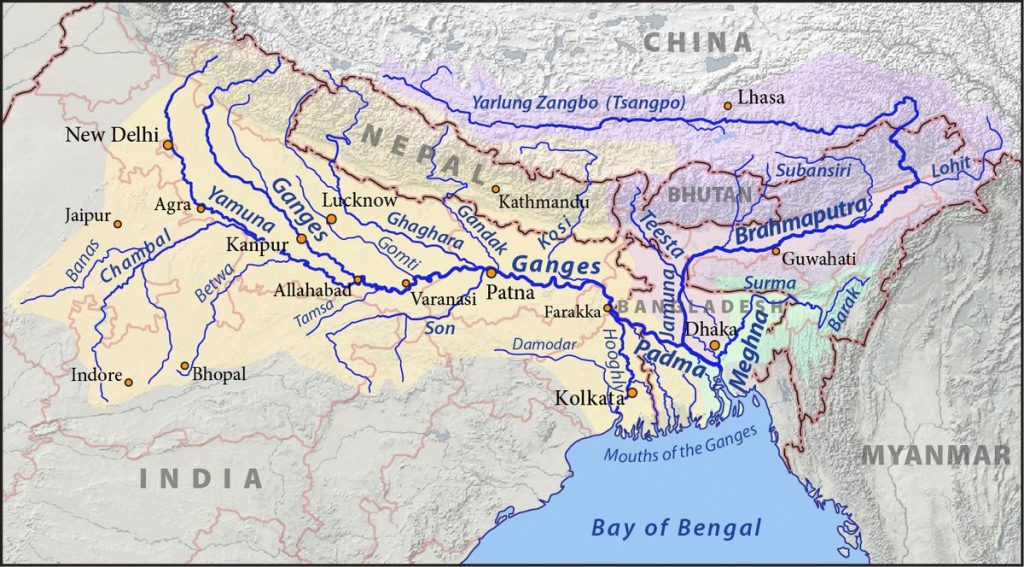
Map of the Ganges, Brahmaputra and Meghna basins showing Farakka just upstream of the Bangladesh border. Map: Pfly, CC BY-SA 3.0, via Wikimedia Commons.
The formula in Annexure I depends on how much water reaches Farakka in each 10-day period:
Flow at Farakka
India’s share
Bangladesh’s share
70,000 cusecs or less
50%
50%
70,000 to 75,000 cusecs
Balance of flow
35,000 cusecs
75,000 cusecs or more
40,000 cusecs
Balance of flow
One condition sits on top of this: between 11 March and 10 May, the leanest weeks, India and Bangladesh each get a guaranteed 35,000 cusecs in alternate 10-day periods. That is why the schedule below switches back and forth in March and April.
Annexure II shows what the formula gives if the river carries its 1949–88 average. Figures are in cusecs (cubic feet per second).
10-day period
Average flow 1949–88
India’s share
Bangladesh’s share
Jan 1–10
1,07,516
40,000
67,516
Jan 11–20
97,673
40,000
57,673
Jan 21–31
90,154
40,000
50,154
Feb 1–10
86,323
40,000
46,323
Feb 11–20
82,859
40,000
42,859
Feb 21–28/29
79,106
40,000
39,106
Mar 1–10
74,419
39,419
35,000
Mar 11–20
68,931
33,931
35,000*
Mar 21–31
64,688
35,000*
29,688
Apr 1–10
63,180
28,180
35,000*
Apr 11–20
62,633
35,000*
27,633
Apr 21–30
60,992
25,992
35,000*
May 1–10
67,351
35,000*
32,351
May 11–20
73,590
38,590
35,000
May 21–31
81,854
40,000
41,854
* The three 10-day periods in which that country is guaranteed 35,000 cusecs. Source: Annexure II of the treaty.
The weak spot is plain from the table. The schedule assumes average flows. In a bad year the river can carry far less, and the treaty only promises “immediate consultations” if flow drops below 50,000 cusecs. Bangladesh’s main demand now is a guaranteed minimum share, which the 1996 text never gave.
Why was Farakka Barrage built, and why does Bangladesh object?
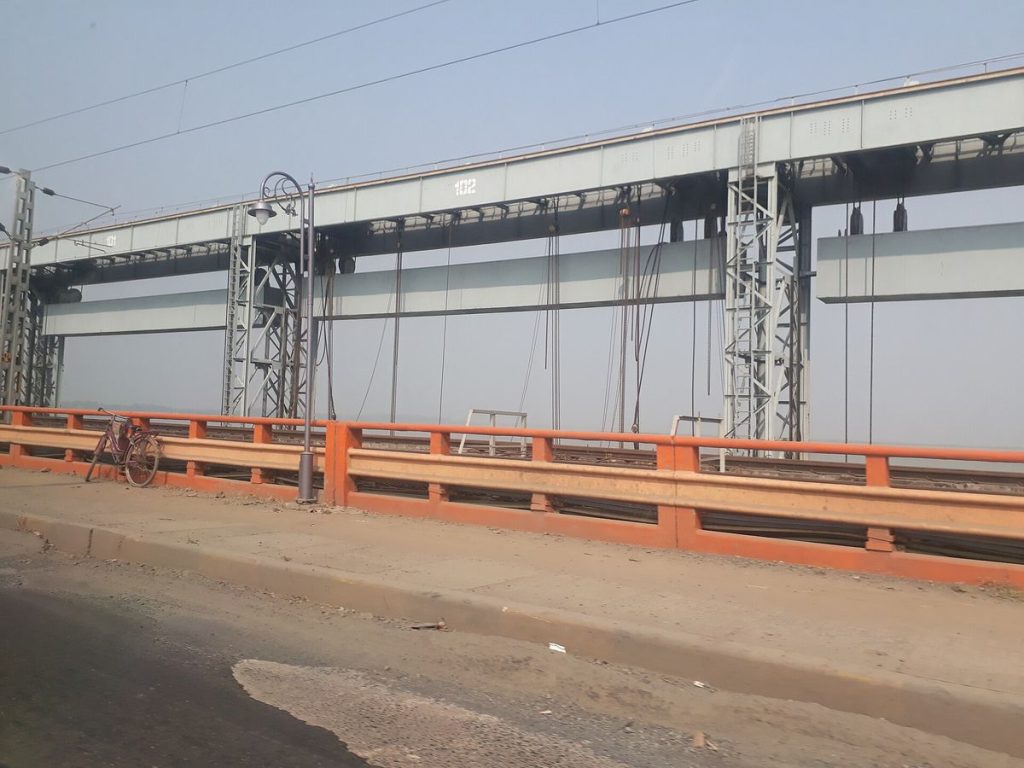
Gate structure of Farakka Barrage on the Ganga in West Bengal, commissioned in April 1975. Photo: Pinakpani, CC BY-SA 4.0, via Wikimedia Commons.
The dispute is really about Farakka Barrage in Murshidabad district, West Bengal, a short distance upstream of the Bangladesh border. It became operational on 21 April 1975. Its job is to push up to 40,000 cusecs from the Ganga into the Bhagirathi–Hooghly through a feeder canal, to flush silt away from Kolkata port.
Every cusec sent into the Hooghly in the dry season is a cusec that does not flow on as the Padma into Bangladesh. Bangladesh links low dry-season flows to salt water moving up the Gorai and the south-west rivers, and to irrigation losses. The Week, citing Bangladeshi state media, reports that the Ganges-Kobadak irrigation scheme, built to cover 955 sq km, now serves about 550 sq km (The Week).
India’s view is that Kolkata port and the Hooghly also need water, and that upstream States like Bihar and Uttar Pradesh draw on the same river before it reaches Farakka.
How did India and Bangladesh reach the 1996 treaty?
The 1996 treaty was the end of a long, uneven road:
Year
What happened
1972
Indo-Bangladesh Joint Rivers Commission set up soon after Bangladesh’s independence
April 1975
Farakka Barrage commissioned on 21 April under a short trial arrangement with Bangladesh
1976
Bangladesh raises Farakka at the UN General Assembly after talks break down
Short memoranda of understanding replace the lapsed 1977 deal
1988–1996
No sharing agreement in force; flows uncertain
12 Dec 1996
Present 30-year treaty signed in New Delhi
Sept 2022
Interim MoU on withdrawing up to 153 cusecs from the Kushiyara, the only new water-sharing pact since 1996
12 Dec 2026
Treaty term ends
Two lessons come out of this record. First, short deals with lapses between them led to the worst years. Second, Article IX’s promise of treaties on other rivers has barely been kept. The Teesta deal planned in 2011 never got West Bengal’s agreement and is still unsigned.
What happens if the treaty expires without renewal?
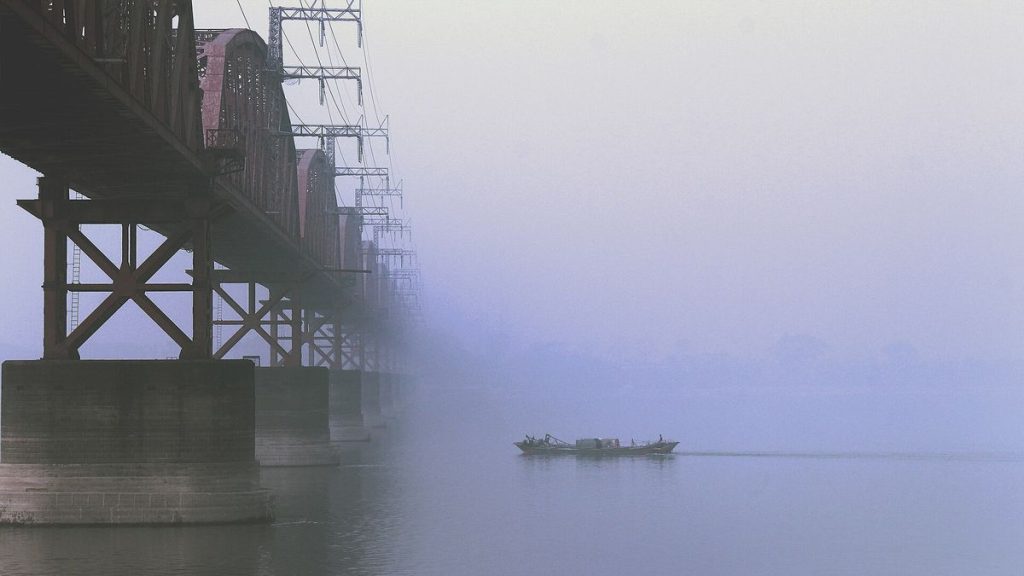
Hardinge Bridge over the Padma in Bangladesh, the second joint flow-measuring point named in the treaty. Photo: Sagorphotos, CC BY-SA 4.0, via Wikimedia Commons.
Legally, an expired treaty creates no duty. After 12 December 2026, India would no longer be bound to release any fixed share at Farakka. Article XI’s 90% floor and the joint measuring teams at Farakka and Hardinge Bridge would also lose their legal basis.
In practice, three things soften the shock:
No dry-season water is due until 1 January. The sharing period is 1 January to 31 May, so the real test comes in early 2027. Chowdhury pointed out that Bangladesh’s dependence on Ganga water rises when its agricultural season begins in February (TBS News).
Customary international law still applies. The general principles of equitable use and no significant harm guide shared rivers. Neither India nor Bangladesh is a party to the 1997 UN Watercourses Convention, so there is no treaty fallback.
Both sides gain from predictability. India has its own reasons, including connectivity, security cooperation and its standing with neighbours, not to let flows become a fresh grievance.
The risk is the 1988–96 pattern: years with no rules, when every lean season turns into a political fight.
What do India and Bangladesh each want now?
The Hooghly at Kolkata, which Farakka was built to keep flushed for the Kolkata port. Photo: Vyacheslav Argenberg, CC BY 4.0, via Wikimedia Commons.
Here is how the two positions look from public statements:
Issue
Bangladesh
India
Form of deal
A new or revised treaty, not a simple renewal (Water Resources Minister, October 2026)
Talks through existing mechanisms such as the Joint Rivers Commission; no terms confirmed
Minimum share
A guarantee clause for its dry-season share
Wants its own domestic needs and those of States along the Ganga considered
Timing
Signing before 12 December 2026
No date given; Bangladesh PM invited to Delhi, no visit fixed (MEA, 3–4 November)
Stopgap
Experts suggest a 3–5 year renewal
No public view
Why West Bengal and Bihar matter. This is the federal angle UPSC loves. Signing treaties is a Union power: Entry 14 of the Union List covers treaties with foreign countries, and Article 253 lets Parliament make laws to implement them even on State subjects. But water is a State subject under Entry 17 of the State List, and Farakka sits in West Bengal. The Teesta story shows that a deal without the State’s support can stall for years. The Week reports that Bihar wants the Centre to hold off on renewal (The Week).
The politics in Dhaka and Delhi. Relations have been strained since August 2024. Bangladesh has asked India to extradite former Prime Minister Sheikh Hasina, the same leader who signed the 1996 treaty, and New Delhi says the request is under examination. Analysts at the Observer Research Foundation and elsewhere see the treaty talks caught up in this wider chill.
How is the Ganga treaty different from the Indus Waters Treaty?
Aspirants often mix up India’s two big water treaties. Keep this table handy:
Point
Ganga Water Treaty
Indus Waters Treaty
Signed
12 December 1996, New Delhi
19 September 1960, Karachi
Parties
India and Bangladesh
India and Pakistan
India’s position
Upper riparian
Upper riparian
Third party
None (purely bilateral)
World Bank is a signatory for certain roles
How water is divided
Flow at one point (Farakka) shared from 1 January to 31 May
Whole rivers allocated: eastern rivers to India, western rivers mainly to Pakistan
Permanent Indus Commission → neutral expert → Court of Arbitration
Status in 2026
Expires 12 December 2026
Held in abeyance by India since April 2025
In Mains, this comparison helps you show that India’s water diplomacy is not one-size-fits-all. With Pakistan it is security-driven. With Bangladesh it is meant to be a model of good-neighbour sharing.
How should UPSC aspirants prepare this topic?
Prelims (GS Paper I): learn the dates (1975, 1977, 1996, 2026), where Farakka is, the 35,000-cusec guarantee window (11 March to 10 May), the 50,000-cusec emergency trigger and the two measuring points (Farakka and Hardinge Bridge). Match-the-following questions on rivers and barrages are common: Farakka on the Ganga, the Teesta Barrage at Gajoldoba, and the Kushiyara in the Barak system.
Mains (GS Paper II, India and its neighbourhood; GS Paper I, geography of rivers): try this 250-word question:
“The expiry of the Ganga Water Treaty is a test of India’s Neighbourhood First policy as much as of water management.” Discuss, with reference to the role of Indian States in river diplomacy.
Structure: what the 1996 treaty does → why it matters to Bangladesh (Padma, salinity, farming) → India’s concerns (Kolkata port, Bihar, West Bengal) → the federal question (Entry 14 and Article 253 vs the State List) → the way forward: a short bridge renewal, joint flow data, basin-level cooperation with Nepal for storage, and a Teesta deal.
A leaders’ meeting. India has invited the Bangladesh Prime Minister to Delhi. A visit before 12 December would be the clearest sign of a deal.
A Joint Rivers Commission meeting. Any ministerial JRC meeting before the deadline matters, since India has named it as the forum.
A short extension. If both sides agree to extend the 1996 terms for a few years while they negotiate, that will be the most likely exam fact for 2027.
The first lean season. If nothing is signed, watch Farakka flows and Bangladeshi complaints from January 2027.
We will update this post when the treaty is renewed, extended or replaced.
FAQs on the Ganga Water Treaty
When does the Ganga Water Treaty expire?
On 12 December 2026. It was signed on 12 December 1996 for a period of thirty years under Article XII, and can be renewed only by mutual consent.
Who signed the Ganga Water Treaty of 1996?
Prime Minister H.D. Deve Gowda for India and Prime Minister Sheikh Hasina for Bangladesh, in New Delhi on 12 December 1996.
How is Ganga water shared under the treaty?
Water at Farakka is shared in 10-day periods from 1 January to 31 May. At 70,000 cusecs or less each side gets half; between 70,000 and 75,000 cusecs Bangladesh gets 35,000; above 75,000 cusecs India gets 40,000. From 11 March to 10 May each side is guaranteed 35,000 cusecs in alternate 10-day periods.
What happens if the Ganga Water Treaty is not renewed?
India would have no treaty duty to release a fixed share at Farakka from the 2027 dry season, and the 90 per cent minimum and joint measurement would lapse. Only general principles of international water law would remain.
Why was Farakka Barrage built?
To divert up to 40,000 cusecs of Ganga water into the Bhagirathi–Hooghly through a feeder canal and keep Kolkata port free of silt. It became operational on 21 April 1975.
Where is the flow measured under the treaty?
At Farakka in India (below the barrage, in the feeder canal and at the navigation lock) and at Hardinge Bridge on the Padma in Bangladesh, by joint teams under Article IV.
Is the Ganga Water Treaty related to the Indus Waters Treaty?
No. The Indus Waters Treaty of 1960 is with Pakistan, has no end date and involves the World Bank. The Ganga treaty of 1996 is a 30-year bilateral deal with Bangladesh with no third party.
The tables of the formula and schedule are taken from Annexures I and II of the treaty. The practice question and answer structure are Prayag IAS Academy’s own suggestions. Photos and the map are from Wikimedia Commons; credits and licences are in each caption.
BIMSTEC was founded on 6 June 1997 and has seven members, a Secretariat in Dhaka and seven sectors. This week’s news, the Sixth Summit outcomes, a SAARC-ASEAN comparison and UPSC notes, with Hindi quick facts.
COP31 in Antalya ended on 22 November 2026 without adopting the Antalya Pact. Why it failed, what was agreed, what India said and the key terms for UPSC.
UPSC CSE 2026 interviews run from 7 December 2026 to 12 February 2027 for 2,526 candidates. How to find your date, reporting time, e-Summon, travel allowance and a plan for the weeks left.
The 1996 Ganga Water Treaty with Bangladesh expires on 12 December 2026. The Farakka sharing formula, what happens if it lapses, what each side wants, and how to prepare it for UPSC.